I undercharged for three years...

I quoted a higher number to three people just to see what would happen. All three said yes.
That was the moment everything changed.
But let me tell you some back story, because like most designers, I charged what I thought people would agree to.
And for a long time, that felt like the safest option to get work! But what next?
Nobody teaches you this part
Design school teaches you hierarchy, typography, colour theory. It does not teach you how to price yourself. It does not teach you how to sit across from a client or send a proposal over email and name a number without apologising for it immediately.
When I started out, I genuinely did not know what the right rate was. There was no benchmark I trusted, no senior designer I could go to and ask without it feeling strange.
So I did what most people do, I started with a very low rate to see how things work. The problem with always getting a yes is that it teaches you that this is what I’m worth. When actually all it means is, this is the lowest at which someone will hire me.
Those are very different things. And it took me a long time to understand the difference.
The experiment I ran
After a few years in the industry, I tried something. I quoted a higher number to three people.
I told myself it was a test. If they said no, I had my answer. I’d go back to what I knew.
All three said yes without negotiating!
And I remember sitting with that for a while, genuinely confused. Because if they said yes, what did that mean about every number I had quoted before? What had I been leaving on the table, month after month, while telling myself I was being reasonable?
The answer was I was just afraid. Afraid of the no or that asking for more meant I’d have to be more.
Let me tell you what happened after that:
The clients changed. People who paid more asked different questions. They were more prepared, respected timelines, trusted the process and had done their research before reaching out. Higher rates filter who you work with.
When you’re undercharging, you get annoyed with revisions because you just want to get done with it. When you’re paid what the work is worth, that resentment mostly disappears. You show up differently. The work shows it.
When I was undercharging, I was unconsciously doing more, adding things that weren’t asked for, making the scope larger than it needed to be. As if extra work would justify the price I was asking. When the price became right, I delivered what was agreed.
I started saying no to the projects that didn’t fit or clients where something in the first conversation didn’t sit right. When you’re undercharging, you take everything because you feel you can’t afford not to. When you’re charging correctly, you have room to choose.

The things designers underestimate when raising rates
a lot of people forget the fact that raising your prices is not merely just a numbers or a design decision, but it is a very big decision. Here are things I wish someone had told me :
The clients who found you when you were cheap found you because you were cheap. That doesn’t mean they’re your ceiling. When you raise rates, some of them won’t follow and that’s okay.
The way you say the number matters as much as the number. “I was thinking somewhere around X, does that work for you?” is a negotiation. “My rate for this is X” is a statement. One invites a counteroffer. The other doesn’t. Most designers present their price the first way and are surprised when clients treat it as the opening of a bargaining process.
You don’t owe anyone an explanation for a rate increase. My rates have changed is a complete sentence. Designers who over-explain their increases signal that they’re not sure they deserve them.
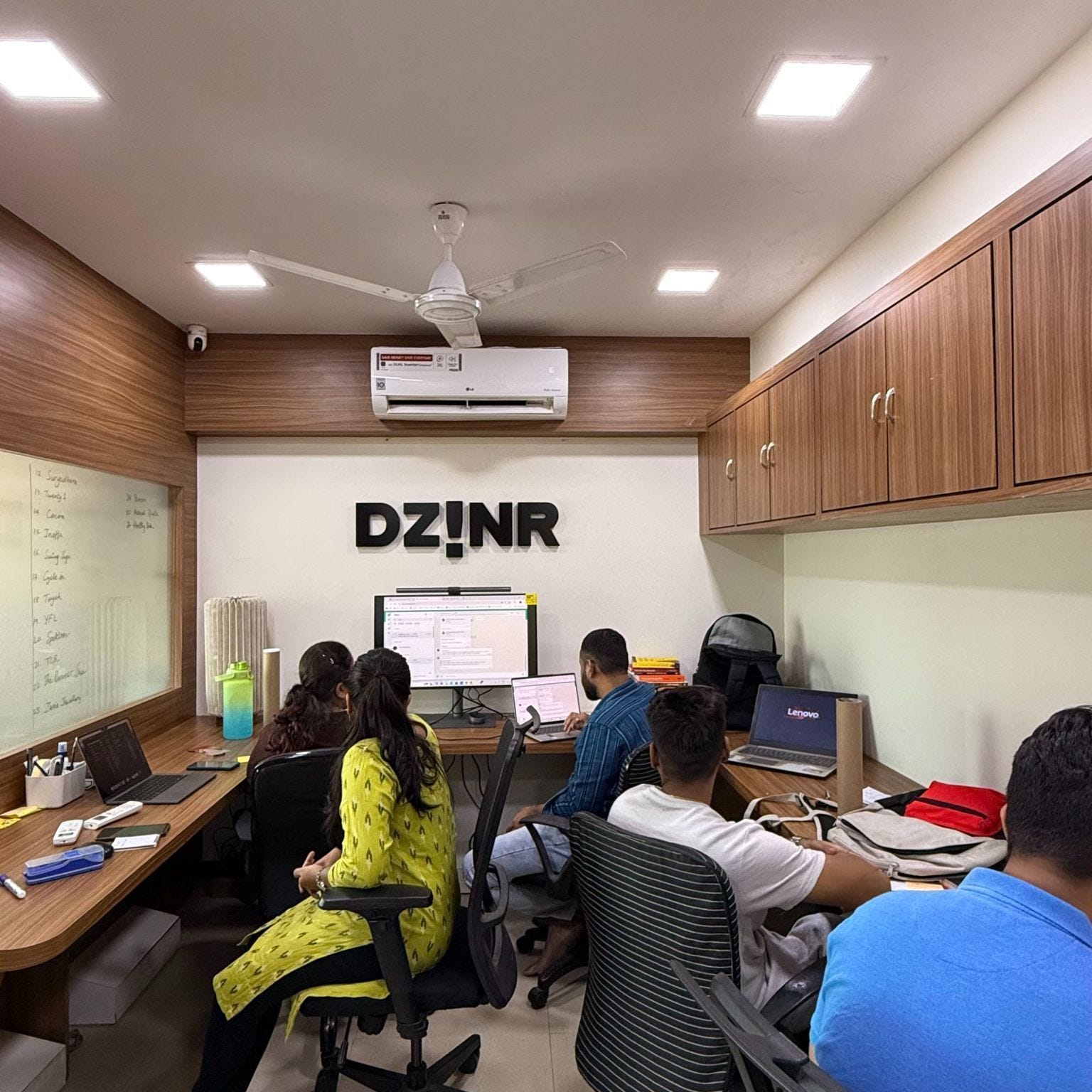
At DZ!NR, we raise our rates mindfully, almost every quarter. Because the work we bring to the table has compounded. The thinking is sharper, process is cleaner, results are more specific and rates should reflect that.
There is a version of this that feels uncomfortable to say publicly. Like you’re telling people you cost more and they should feel lucky.
That’s not what this is. This is just, the work has grown. The price should grow with it. These two things should track each other for as long as you’re getting better, which, if you’re serious about what you do, should be always.
So before I close, I just want to ask you one question, if you quoted a higher number to three people tomorrow and all three said yes, what would that tell you?
The answer might be the most useful thing you read this week.
Drop in the comments: what’s your relationship with pricing like? Is it something you’ve figured out, or is it still the conversation you avoid having with yourself? I promise you’re not the only one.
Until next week
Anik 🧢
HI, I have been in the industry for 24 Years and still find it difficult to get my costing right. I know for certain types of jobs I am specialisesd to I can charge a higher rate and 2 of my clients I have been working with for over 9 years so they respect my rates. The ones that I find that don’t respect my rates or my time tends to be ad agencies who give you a 10% brief and once you quote give you the full 100% quote. Then when you go back and question anything there starts your problems and the whole project you just get screwed over again and again. I think my rate is rather low for my skill set as I am a full digital/ web designer, coder, graphic designer …..etc. It just seems our industry has never been respected
plz recommend me some of the newsletters that you love/following
about design.
thanks…!